About me

- Vladan Lausevic
- Stockholm, Sweden
- My academic blog with history, primarily military history as the main theme. Please leave a comment that can be relevant and useful for the topic which you find interesting. I am writing in several languages, including English, depending on the theme and the languages of the sources. At the moment I am working as guide at Batteriet Arholma military museum in Stockholm. For further information please contact me on lauvlad89@gmail.com
måndag 1 oktober 2018


fredag 29 juni 2018
Emigration policy for soft power and political influence
Recently I read the article by Gerasimos Tsourapas “Authoritarian emigration states: Soft power and cross-border mobility in the Middle East”. In my view, since I have never read something similar before when it comes to policy-making, it represents an interesting case of how an authoritarian government can make and use migration policy to conduct its interests in other countries.
Tsourapas article is about Egypt during the Cold War period -Nasser’s
administration (1954-1970). He writes that Nasser’s government developed an
emigration policy that subsidized the short-term emigration
of high-skilled professionals, who were also loyal supporters of the ruling
regime, across the Arab world and Africa. As Tsourapas writes, emigration is often researched
in economic terms as regarding remittances or in political terms as regarding dissidents.
The case of Nasser’s government emigration policy represents other aspects as
foreign policy, geopolitics, ideological interests, soft power.
The case is interesting since Nasser’s administration developed a policy
where high-skilled Egyptian
professionals as teachers and doctors were used, as Tsourapas writes,
as “a
tool of cultural diplomacy to disseminate ideas of anti-colonialism,
anti-Zionism, and Egyptian-led pan-Arabism across the Arab world”.
More information about the article you can find here.
måndag 2 april 2018
Political communication and Trump
Recently I read a paper written by Lucian Gideon Conway, Meredith A. Repkea and Shannon C. Houck under the name "Donald Trump as a Cultural Revolt Against Perceived Communication Restriction: Priming Political Correctness Norms Causes More Trump Support".
One of the main arguments of the paper is that "Political correct norms" as for example, using communication perceived as inclusive when it comes to minority groups can:
1) result in the reduction of the amount of negative communication in the short term
2) may produce more support for negative communication in the long term.
The paper provides evidence for what researchers describe as norms that are designed to increase the overall amount of positive communication can actually "backfire" by increasing support for a politician who uses extremely negative language that explicitly violates the norm.
In my view, one thing that paper is describing is the current situation of polarisation and radicalisation of US political development. One fact is that Donald Trump won the presidency also by using political communication often described as racist, sexist and xenophobic.
According to the paper, one explanation for Trump’s success involves a socio-historical discussion that is essentially exclusive to conservative American politics where evidence suggests that increased authoritarianism, increased social dominance, and lower cognitive abilities were all predictive of Trump support during
the election.
In their general discussion, the researchers conclude that their results provide support for a connection between the salience of restrictive communication norms and support for Trump.
For example, participants who had the interests to think about and focus on the restrictive communication norms during the presidential campaign showed more support for Trump than participants who were not so primed.
For more information about the paper, click on the following link.
One of the main arguments of the paper is that "Political correct norms" as for example, using communication perceived as inclusive when it comes to minority groups can:
1) result in the reduction of the amount of negative communication in the short term
2) may produce more support for negative communication in the long term.
The paper provides evidence for what researchers describe as norms that are designed to increase the overall amount of positive communication can actually "backfire" by increasing support for a politician who uses extremely negative language that explicitly violates the norm.
In my view, one thing that paper is describing is the current situation of polarisation and radicalisation of US political development. One fact is that Donald Trump won the presidency also by using political communication often described as racist, sexist and xenophobic.
According to the paper, one explanation for Trump’s success involves a socio-historical discussion that is essentially exclusive to conservative American politics where evidence suggests that increased authoritarianism, increased social dominance, and lower cognitive abilities were all predictive of Trump support during
the election.
In their general discussion, the researchers conclude that their results provide support for a connection between the salience of restrictive communication norms and support for Trump.
For example, participants who had the interests to think about and focus on the restrictive communication norms during the presidential campaign showed more support for Trump than participants who were not so primed.
For more information about the paper, click on the following link.
söndag 1 april 2018
Debatten om GAL-TAN 2014-2017

Källa: Henrik Oscarsson, SOM-institutet vid Göteborgs universitet
Jag har sedan hösten och vintern 2017 hållit på med att skriva en studie om GAL-TAN skalan. Idag publicerar jag dokumentet som finns att ladda ned via denna länk.
Fokus för studien var att undersöka om hur GAL-TAN skalan presenterades i svenska medier under 2014-2017. Här kommer sammanfattningen från studien:
1. GAL-TAN skalan handlar om icke-ekonomiska, sociala och kulturella frågor som invandring, narkotika och klimat. Det är en skala som grundas i hur politiska aktörer ser på samhället och människan.
2. Diskussionerna om GAL-TAN skalan i svenska medier under perioden 2014-2017 relaterade till diskussioner om högerpopulism och nationalism, valet 2014 och 2018, opinionsundersökningar och
väljarbeteenden, partiernas historia och utveckling, globalism och kosmopolitism, ekonomiska och icke-ekonomiska frågor.
3. I synen på GAL-TAN skalan framgick skillnaden mellan till exempel progressiva och konservativa aktörer. Medan progressiva aktörer är mer positiva till skalan är konservativa aktörer mer negativa.
4. Feministiskt Initiativ, Vänsterpartiet, Socialdemokraterna, Liberalerna och Centerpartiet ses i diskussionerna som GAL-partier medan Moderaterna, Kristdemokraterna och Sverigedemokraterna ses som TAN-partier. Både Socialdemokraterna och Moderaterna är partier som ”delas itu” med högre grad av interna GAL-TAN skillnader.
onsdag 14 februari 2018
Ruska LGBTQI istorija
Članak vezan za istoriju seksualizma u Rusiji, naročito za period prije 1917.
"Kako se početkom XX veka pojavio sve veći broj liberalnih pokreta, sve se više govorilo o dekriminalizaciji homoseksualnosti, naročito u pravnim krugovima. Jedna od glavnih figura ovog pokreta bio je Vladimir Nabokov – otac pisca Vladimira Nabokova, poznati advokat i osnivač Demokratske partije. On je ujedno i prvi ruski političar koji se javno zalagao za gej prava, te se bavio zakonskim položajem članova LGBTIQ zajednice u carskoj Rusiji, i borio za dekriminalizaciju. Posle revolucije 1905. godine, zakoni koji su sankcionisali homoseksualnost postali su jači nego ikada, a dolazili su od većinski homofobičnih političara"
http://www.xxzmagazin.com/homofobija-je-srce-uvoza-i-izvoza
lördag 10 februari 2018
Global Mobility Report 2017
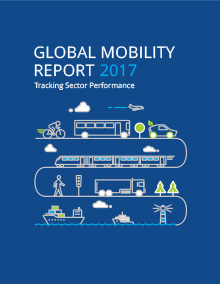
The Global Mobility Report 2017 is the first-ever attempt to examine the performance of the transport sector, globally, and its contribution to a sustainable future. The report is also including aspects such as the 2030 Agenda and how transportation is relevant for Sustainable Development. The GMR is built around three components:
1. Four global objectives that define “sustainable mobility”
2. Quantitative and qualitative targets for those objectives, drawn from international agreements
3. Indicators to track country-level progress towards those objectives. It covers all modes of transport, including road, air, waterborne and rail.
Data for the report is based on statistics and other information from more than 180 countries.
måndag 11 december 2017
Little bit of history from Ogre
Last week I was in Riga and
staying at my friend’s place in Ogre, which is around 40 minutes from the
centre. During the week, I visited the local history and art museum. The museum
used to be a bank building during the Soviet period. For more info about the museum, you can find here.

USSR State Bank - Ogre Branch

Bank building from 1987

Some kind of a mechanic counting machine

Body armour for the personnel working with money transfer

Old school style counting

Before the renovation

Office space from 1990 as the bank got privatised. Check out the computers.

Train schedule between Riga and Ogre.

Nivea cream old school mode

Hipster bike before it was cool!

Part of the exhibition was about the WWI period and the German army.

Equipment for trench warfare.

Prenumerera på:
Inlägg (Atom)