About me

Mitt foto
Stockholm, Sweden
My academic blog with history, primarily military history as the main theme. Please leave a comment that can be relevant and useful for the topic which you find interesting. I am writing in several languages, including English, depending on the theme and the languages of the sources. At the moment I am working as guide at Batteriet Arholma military museum in Stockholm. For further information please contact me on lauvlad89@gmail.com

söndag 20 oktober 2013

Militärattachéer under 1900-1914 inom generalstaben / Military attachés during 1900-1914 in the Swedish General Staff


Efter att ha presenterat en tabell med studieresor som gjordes inom generalstaben under perioden 1900-1914 ville jag skriva ett inlägg om militärattachéer. När generalstaben grundandes 1873 etablerades de första posteringarna in Berling, Paris samt S:t Petersburg. Fram till första världskrigets utbrott fanns det 13 stycken militärattachéer. De nya posteringarna tillkom i Storbritannien, Österrike-Ungern, Italien, Japan, Rumänien, USA, Osmanska riket, Danmark, Norge och Belgien. Efter att världskriget startade drogs militärattachén i Belgien och Rumänien in samtidigt som det tillkom militärattachéer i Nederländerna och Schweiz. 


After presenting a table with the study tours taken within the General Staff during the 1900-1914 I wanted to write a comment about the military attachés. When the General Staff was created in 1873 he first attaché posts were established in Berlin, Paris and Saint Petersburg. Before the WWI there were in total 13 attachés. The new posts were established in the UK, Austria-Hungary, Italy, Japan, Romania, USA, Ottoman Empire, Denmark Norway and Belgium. After that the war started the attachés in Belgium and Romania was suspended while new posts were established in the Netherlands and Switzerland. 


onsdag 16 oktober 2013

Bunker tourism in Albania


For many people, the name of the longtime Albanian leader Enver Hoxa is synonym with isolation, totalitarian rule, police state, communism and among many other aspects: bunkers. The legacy of his government can still be seen in today's Albania since it would cost a lot of money to remove all of the shelters around the country which were built between 1967-1986.

However, in today's Albania, the bunkers are used in other ways as in cultural terms. I have found information on a danish news site for East, Central and South Europe (only danish) about a music festival called BunkerFest where music bands from Albania, Kosovo and Macedonia are gathering. So if you are interested in "bunkertourism", then Albania is the right place.


creative bunker?

WW1 beyond the mud and trenches - BBC’s plans for the centenary of World War One in 2014


As my BA assignment is mostly about the period of The Great War, I see towards next year with the BBC's plans for making new documentaries about WWI. I would also like to be in Sarajevo at this point where a ceremony is going to be held and where historians are going to have meetings for discussions. 

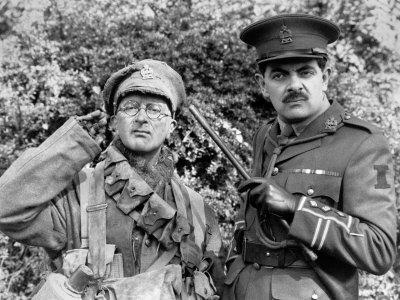
Also, do you remember these lads when it comes to WWI? 


tisdag 15 oktober 2013

Turkiska stormtrupper / Turkish stormtroopers

När jag såg bilden för första gången fick jag genast en association till de tyska stormtrupperna. Bland annat berodde det på den tyska stålhjälmen samt tygsäcken i vilken stormsoldaten bar sina handgranater. Bilden är dock tagen någonstans i Osmanska riket under tidig 1918 av generalstabens studiekommission under ledning av översten Joakim Åkerman som samtidigt var statsråd och chefen för Lantförsvarsdepartamentet som till en viss del var samtidens motsvarighet för dagens Försvarsdepartement.

Den osmanska armén hade under världskrigets sista år satt upp stormbataljoner efter tysk förebild. Notera att 6 av 7 stormsoldater på bilden bär stålhjälmen förutom den bakre soldaten längst till höger som bär huvudbonad i form av en "solhatt" eller "mjuk tyghjälm" som var reglementerad innan och under större delen kriget i olika versioner och kan jämföras med den brittiska khakihjälmen under kriget i Mellanöstern. Om det kan du läsa mer på hemsidan om solhjälmar. Den andra bilden visar en visuell historik av osmanska arméns uniformer och huvudbonad under kriget.


When I saw the picture for the first time instantly, I thought about the German stormtroopers because of the German-made steel helmet and the haversack where the stormtroopers carried his hand grenades. The picture is however taken somewhere in the Ottoman Empire by the Swedish General Staffs study commission. The commission was led by colonel Joackim Åkerman who at the same time was a cabinet minister for defence, a position that was partly similar to the modern Swedish MoD.

During the last year of the WWI, the Ottoman army formed storm battalions based on the German model. Note that the 6 of 7 soldiers on the picture are bearing the steel helmet while the rear soldier far to the right is bearing a kind of a "sun hat" or "soft helmet". This helmet was used in different versions by the Ottoman army before and during the most time of WWI. It is similar the British kahkihelmet that was used during the WWI in the Middle East. About that, you can read more on the homepage about the sun helmets.

The other picture showing a visual overview of the Ottoman army uniforms and headgear during the war.


måndag 14 oktober 2013

Nerve Agent History - Sarin Gas


I fredags tilldelades Nobels fredspris till Organisation for the Prohibition of Chemical Weapons  OPWC som har direkt samarbete med FN genom att följa bestämmer tagna inom världsorganisationen . Rörande kemiska vapen har jag lagt upp följande videoom nervgasen sarin (GB) och hur den testades i USA. Sarin uppfanns i Naztityskland och  kom aldrig att användas i strid under andra världskriget men både amerikaner och ryssar som fick tag på den i slutet av kriget kom att använda den i uppbyggandet av sina kemiska vapenförråd under kalla kriget.


Varning för känsliga tittare!
Warning for sensitive viewers!


On Friday last week, the Nobel Peace Prize was awarded to the Organisation for the Prohibition of Chemical Weapons  OPWC which is directly cooperating with the United Nations by following the decisions taken by the world organisation. The video shows the nerve gas sarin (GB) and how it was tested by the US military. The gas was invented in Nazi Germany and was not used during the World War 2, but both American and Russian military that got it at the end of the war had a lot of use of it for in amassing of their chemical weapons arsenal during the Cold War.

söndag 13 oktober 2013

Svenskt Militärhistoriskt Bibliotek


Som medlem i Svensk Militärhistoriskt Bibliotek vill jag passa på att göra reklam för denna unika bokklubb. Det är två saker som jag värdesätter och uppskattar hos SMB:

- Att det inte förekommer någon köptvång. Istället ges varje månad en så kallad "förmånsbok" som du som medlem kan antigen tacka ja eller nej till eller bättre sagt beställa eller avbeställa.

- Att SMB ger ut egna böcker som endast kan köpas inom SMB. Dessutom kan du som medlem påverka vilka böcker som ska ges ut eftersom SMB ger ut böcker efter läsarnas önskemål.


För närvarande ger SMB ut böcker om Romarriket vilket går att läsa mer om dels på hemsidan och dels via medlemstidningen Pennan och Svärdet som ges ut varje månad. Som medlem får du alltså särskilda böcker och en bokklubb med utmärkt service.


www.smb.nu 

torsdag 10 oktober 2013

Nya preliminära resultat för undersökningen rörande studieresorna i generalstaben under 1914-1918. / New preliminary results for the study of the General Staffs study tours during 1914-1918

Egentligen skulle jag ha skrivit om följande information redan under helgen men på grund av "tekniska problem" med fotografering av källor under veckans gång kommer resultaten först nu. I tabellen presenteras studieresorna som företogs till Tyskland, Österrike-Ungern, Frankrike, Storbritannien samt övriga. Just under övriga ingår Norge, Bulgarien, Osmanska riket, Schweiz samt Belgien vilka jag valde att klassa under övrigt eftersom endast 7 av totalt 62 resor gjordes till dessa länder. I studien jag använt mig av 56 reserapporter och anledningen att antalet resor är 62 beror på att vissa resor gjordes till  flera länder samtidigt.

Att resultaten fortfarande  är preliminära beror på att eventuellt nya källor kan  dyka upp som kan förändra antalet resor. Nästan alla rapporter är dokumenterade i form av själva rapporten medan ett fåtal finns nedtecknat på olika listor över inkommande meddelanden till generalstabens utrikesavdelning samt Artilleriinspektören.


   Generalstabens studieresor 1914-1918 
År
Tyskland
Österrike-Ungern
Frankrike
Stor-
britannien
Övriga
S:a
1914
5
3
3
2
3
16
1915
4
6
3
1
1
15
1916
2
4
1

1
8
1917
3
4


7
1918
8
6


2
16
S:a
22
23
7
3
7
62


The plan was to write the study results already after during the weekend but due to the "technical problems" regarding taking photos of the sources used in the study. In the table, I have chosen to present the amount of study tours that were done in Germany, Austria-Hungary, France, Great Britain and Others. The group of "Others" is made of Norway, Belgium, Bulgaria, Switzerland and Ottoman Empire since only 7 of in totally 62 study tours went to these countries. I have used 56 reports in the study, and the reason the number of study tours is more significant is because of that some study tours were done in two or more countries at the same time. 

Reason that the study results are still preliminary is since eventually, new sources could be founded later. The majority of the reports are well documented because the original rapport has been saved while a small number reports is missing but can be instead be founded in the different lists in General Staffs "Foreign section" and "Inspector for artillery".


Swedish General Staff study tours 1914-1918 
Year
Germany
Austria-Hungary
France
Great Britain
Other
Total
1914
5
3
3
2
3
16
1915
4
6
3
1
1
15
1916
2
4
1

1
8
1917
3
4


7
1918
8
6


2
16
Tot.
22
23
7
3
7
62